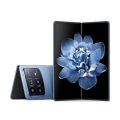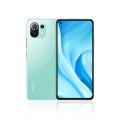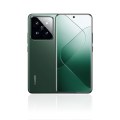
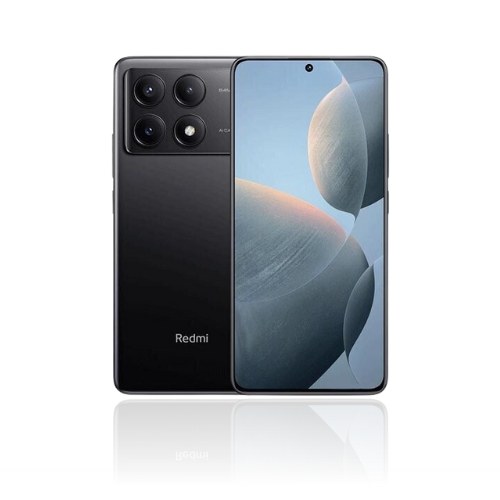
| Global price | Coming soon |
| Status | Coming Soon |
| SIM SIM (Subscriber Identity Module) is a small card that contains mobile network subscriber's account information. This allows the phone using the card to attach to a mobile network. The SIM card is most commonly associated with GSM and UMTS mobile networks. Moving a SIM card from one phone to another allows a subscriber to switch mobile phones without having to contact their mobile network carrier. SIM cards can also be used by a phone to store limited amounts of data, such as phone numbers and text messages. | Dual SIM (Nano-SIM, dual stand-by) |
| Others | IP68 dust/water resistant (up to 1.5m for 30 min) |
| 2G Network |
GSM 850 / 900 / 1800 / 1900 - SIM 1 & SIM 2 CDMA 800 |
| 3G Network |
HSDPA 850 / 900 / 1700(AWS) / 1900 / 2100 CDMA2000 1x |
| 4G Network |
1, 2, 3, 4, 5, 7, 8, 12, 17, 18, 19, 20, 26, 28, 34, 38, 39, 40, 41, 42 |
| 5G Network |
1, 3, 7, 8, 20, 28, 38, 41, 77, 78 NSA |
| Speed | HSPA 42.2/5.76 Mbps, LTE-A, 5G |
| GPRS GPRS (General Packet Radio Service) is a packet oriented mobile data service on the 2G and 3G cellular communication system's global system for mobile communications (GSM), Generally, GPRS is used for the purpose of wireless data transfer, such as sharing pictures and videos or browsing the Internet via a mobile phone connection. | |
| EDGE EDGE (Enhanced Data GSM Environment) is a wireless network technology generally considered the next step in the 2G network offers data transfer rates up to four times faster than ordinary GSM networks, Generally, EDGE is used for the purpose of wireless data transfer, such as sharing pictures and videos or browsing the Internet via a mobile phone connection. |
| Device Type | OLED capacitive touchscreen, 68B colors |
| Size | 6.67 inches |
| Resolution | 1220 x 2712 pixels |
| Features |
144Hz, Dolby Vision, HDR10+, 2600 nits (peak) |
| Operating System OS => Every computer system run on a base software called Operating System (OS). Operating System controls all basic operations of the computer (such as smartphone, PDAs, tablet computers and other handheld devices). The Operating System allows the user to install and run third party applications (apps), apps are used to add new functionality to the device. | Android 14 |
| Chipset Chipset is a group of integrated circuits designed to perform one or a more dedicated functions, often with real time computing constraints, Popular smartphones are equipped with more advanced embedded chipsets that can do many different tasks depending on their programming. | Mediatek Dimensity 9200+ (4 nm) |
| CPU CPU (Central Processing Unit) mostly known as processors, CPU processes instructions in order to carry out certain functions that make your device operate properly. Processors are often described as the brain of computers, smartphones and tablets, Smartphones and tablets rely on processors to carry out their every task, Processors are an incredibly important factor in selecting any type of computing device, including your smartphone. | - |
| GPU GPU (Graphics Processing Unit) is a single-chip processor designed to rapidly manipulate and alter memory to accelerate the creation of images in a frame buffer intended for output to a display, This includes things such as lighting effects, object transformations, and 3D motion. | - |
| Triple | 50 MP 8 MP 2 MP |
| Features camera | Dual-LED dual-tone flash |
| Video | 8K@24fps, 4K@30/60fps, 1080p@30/60/120/240/960fps, gyro-EIS, HDR10+, 10-bit |
| Single | 20 MP |
| Features Selfie | HDR, panorama |
| Card Slot Memory Card Slot is a special slot for inserting a memory card. Memory cards allow you to expand the phone's built-in memory, A memory card (sometimes called a flash memory card or a storage card) is a small storage medium used to store data such as text, pictures, audio, and video, for use on small, portable or remote computing devices such as mobile phones, mp3 players, digital cameras. | No |
| Internal Storage Internal Storage is a data storage space (flash memory) mostly used in smartphones, tablets and other electronic devices where operating system, apps, music, photos, videos, files and other user data Is stored. | 256/512 GB / 1TB |
| RAM RAM (Random Access Memory) is a type of computer memory that can be accessed randomly, any byte of memory can be accessed without touching the preceding bytes that allows information to be stored and accessed quickly from random locations. RAM is the most common type of memory found in computer systems, smartphones, tablets and other electronic devices. | 16 GB |
| WLAN | Wi-Fi 802.11 a/b/g/n/ac, dual-band, Wi-Fi Direct, hotspot |
| Bluetooth Bluetooth is a wireless communications technology for exchanging data between mobile phones, headsets, computers and other network devices over short distances without wires, Bluetooth technology was primarily designed to support simple wireless networking of personal consumer devices. | 5.2, A2DP, LE |
| GPS GPS The Global Positioning System is a satellite-based radio navigation system, GPS permits users to determine their position, velocity and the time 24 hours a day, in all weather, anywhere in the world, In order to locate your position, your device or GPS receiver must have a clear view of the sky. | Yes, with A-GPS, GLONASS, GALILEO, BDS |
| NFC NFC (Near field communication) is a set of standards for smartphones and similar devices to establish peer-to-peer radio communications with each other by touching them together or bringing them into proximity, usually no more than a few inches. | |
| FM Radio | No |
| USB | USB Type-C 3.0 |
| Infrared port | No |
| Sensors Sensors are electronic components that detects and responds to some type of input from the physical environment. The specific input could be light, heat, motion, moisture, pressure and location, The output is generally a signal that is converted to use in computing systems, a location sensor, such as a GPS receiver is able to detect current location of your electronic device. |
Fingerprint (under display, optical), accelerometer, gyro, proximity, compass, color spectrum |
| Messaging | Yes |
| Java Support Java for Mobile Devices is a set of technologies that let developers deliver applications and services to all types of mobile handsets, ranging from price efficient feature-phones to the latest smartphones. Java is currently running on over 3 billion phones worldwide, and growing. It offers unrivaled potential for the distribution and monetization of mobile applications. | No |
| Browser Web Browser => a web browser is a software application used to locate, retrieve and display content on the World Wide Web, including Web pages, images, video and other files, The primary function of a web browser is to render HTML, the code used to design or markup webpages. | Yes |
| Battery Type Battery Type => Cell phones run on various kinds of batteries depending on the manufacturer, phone size or shape and features. There are basically four types of cell phone batteries => Lithium Polymer, Lithium Ion, Nickel Metal Hydride and Nickel Cadmium. | Li-Ion (Lithium Ion) |
| Capacity Battery Capacity is a measure (typically in Amp-hr) of the charge stored by the battery, and is determined by the mass of active material contained in the battery. The battery capacity represents the maximum amount of energy that can be extracted from the battery under certain conditions. | 5000 mAh |
| Made by | China |
| Colors |
Black, White, Green |
If you want to buy this Xiaomi Redmi K90 Ultra mobile from India, its price may be around ₹74,970, but there are a few variants, due to which its price may decrease or increase. Thank you very much for visiting our website. Today we will talk about a wonderful mobile from Xiaomi, whose model is Xiaomi Redmi K90 Ultra. This mobile is not available yet but it is expected that it will be available in the Indian market very soon, and until then we will have to wait.
| Model | Xiaomi Redmi K90 Ultra |
| Price | Rs. coming soon |
| Display | 6.67″ 1220×2712 pixels |
| RAM | 12/16/24 GB |
| ROM | 256/512 GB / 1TB |
| Released | February, 2024 |
Display: We enjoy Xiaomi mobiles a lot in our lives, it has become deeply embedded in our lives. So when a new Xiaomi mobile model comes to the market, we think about how the performance of that mobile will be and we try to know what the display size of that mobile will be. So Xiaomi has used a 6.67-inch AMOLED, 144Hz refresh rate, 1440 x 3200 pixel resolution display in this mobile, thinking about their users.
Processor: Since this mobile has a lot of processing power, Qualcomm Snapdragon 8 Gen 4 (Octa-core) has been used as the processor.
RAM & Storage: This mobile may have several variants, the most notable of which are 12GB / 16GB RAM, 512GB ROM.
Camera: We are very fond of textures, so how about the main camera on a mobile? So, keeping the user in mind, Xiaomi has used a 108MP + 16MP + 12MP triple camera setup on the rear; 32MP selfie camera on the front for this mobile.
Battery: It is expected to use 6000mAh, fast charging support to maintain long-time battery backup.
Operating system: This mobile is usually Android version and it is expected that this mobile will use Android v14.
Others: Apart from that, other important features include 5G support, Dual SIM, USB Type-C, NFC.
If you want to buy Xiaomi’s Redmi K90 Ultra from India, there are some popular platforms from where you can order this mobile. Since Xiaomi’s Redmi K90 Ultra is not available in the market yet. We may have to wait for that, you can follow Xiaomi’s official page to know more. Below are the names of some authentic places from where you can order this mobile.
We always try our best to keep our website content and information updated and correct, the material and information contained on our website is for general information purposes only, You should not rely upon the material and information as a basis for making any business, legal or any other decisions.